
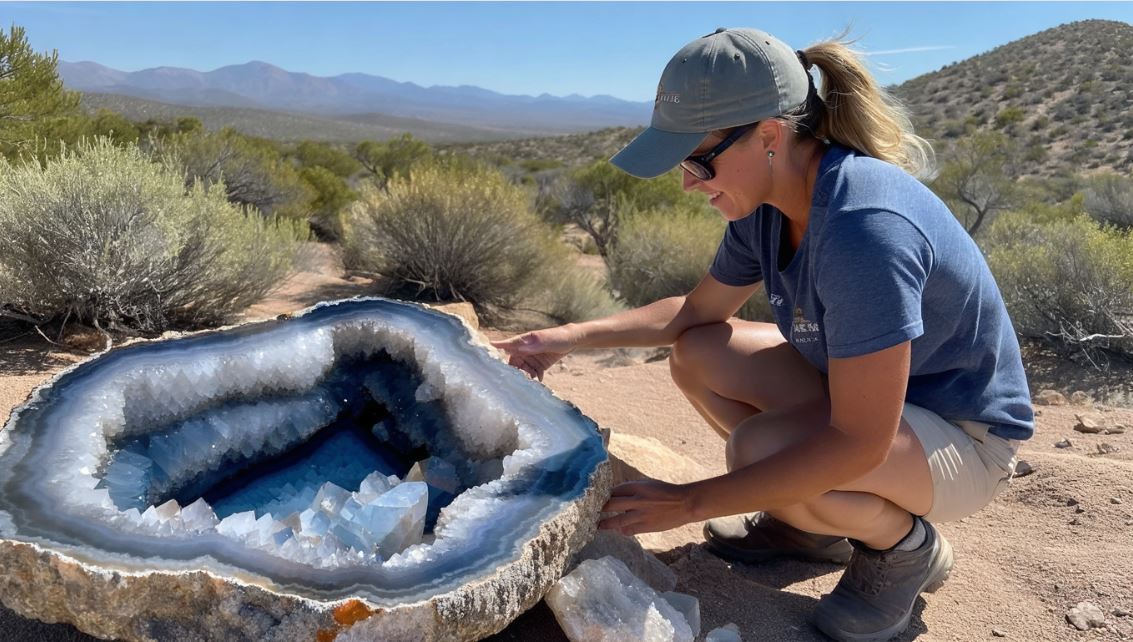

Geode hunting might seem like a peaceful outdoor hobby, but it’s packed with hidden risks most rockhounds don’t anticipate. Sharp cliffs, unstable ground, remote locations, and unexpected wildlife can turn your treasure hunt dangerous in seconds.
This guide isn’t meant to scare you away—it’s designed to keep you safe.
In this post, I’ll give you a rundown of some common dangers you might encounter and tips on how to avoid them while you’re out in the field.
So read this before you grab your gear and head out!
#1 Injury From Tools
One of the most immediate dangers in geode hunting is the potential for injury from tools.
Whether you’re using a hammer, pickaxe, or chisel to break open a geode, improper handling can lead to cuts, bruises, or worse.
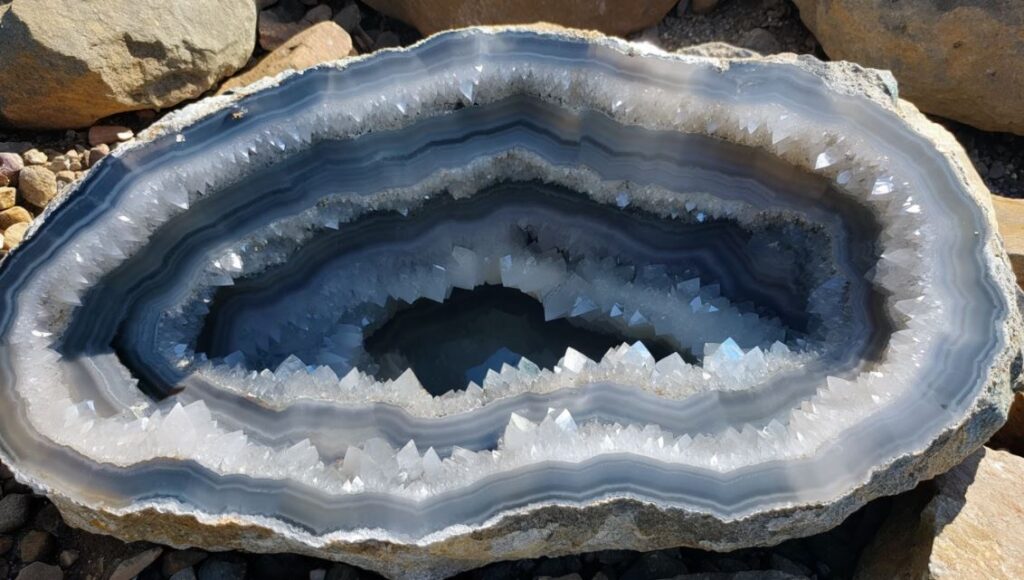
If you’re not careful, you could easily miss the rock and hit your hand or leg, especially if you’re using a hammer with a lot of force.
It’s crucial to wear safety gloves, use your tools with caution, and make sure you have a firm grip on everything you’re using.
Eye protection is also a smart idea, just in case a rock shard flies off in an unexpected direction.
Also Read: What Makes A Great Geode Display Case
#2 Rockfalls And Loose Terrain
Many geode hunting spots are located in rocky or uneven terrain, which means there’s always the risk of loose rocks or even small rock falls.
When you’re hiking in these areas, take your time and be mindful of where you step.
A misstep on a loose slope could send rocks tumbling, potentially causing injury.
If you’re climbing or navigating tricky areas, it’s a good idea to have sturdy footwear with good traction to help avoid slipping.
And always stay alert to the sounds of shifting rocks or movements in the environment.
#3 Heat Exhaustion Or Dehydration
Geode hunting often takes you to places where temperatures can soar, particularly if you’re hunting in desert or rocky areas.
Spending hours in the sun without proper hydration can lead to heat exhaustion or dehydration, both of which can be dangerous.
Be sure to pack plenty of water and drink regularly, even if you’re not thirsty.
Take breaks in the shade when possible, and avoid the hottest part of the day if you can.
Wear light, breathable clothing and a wide-brimmed hat to protect yourself from UV rays.
#4 Snake Bites Or Insect Stings
If you’re hunting for geodes in areas where wildlife is abundant, you’ll need to be cautious of snakes, insects, and other critters.
Snakes may be hiding among rocks or in crevices, and a bite could be not just painful but also dangerous depending on the species. Certain insects like bees, wasps, or even ticks can pose a threat too, especially if you disturb their nests.
Wear long pants, and protective clothing to minimize your risk of coming into contact with these creatures. Oh and get yourself some high-top boots made of thick leather too.
If you’re in snake country, think about getting snake gaiters too.
Always check your surroundings and be extra cautious when reaching into tight spaces or moving large rocks.
If you do get bitten by a snake, stay calm, don’t move the bitten area much, and get medical help right away. Don’t try to catch the snake or tie off the bite – that just makes things worse.
Also Read: What Is The Mohs Scale And Why Does It Matter
#5 Sharp Rock Edges And Cuts
Geode hunting involves a lot of handling of rocks, and some of these can have sharp edges.
Scratches and cuts from rough rock surfaces are a common injury among geode hunters, and while they might not always be serious, they can still be painful and lead to infection if not properly treated.
Make sure you wear thick gloves to protect your hands and keep a first aid kit on hand in case of an accidental cut or scrape.
If you do get a cut, clean it thoroughly and apply antiseptic to reduce the risk of infection.
#6 Getting Lost
Many geode hunting spots are off the beaten path, which means there’s a chance you could wander a bit too far or take a wrong turn.
Getting lost in unfamiliar terrain is a real hazard, especially if you’re in a remote area with little to no cell service.
Always make sure to have a map or GPS device on you, and if you’re heading out into the wilderness, let someone know where you’re going and when you plan to return.
Consider going geode hunting with a buddy, as it’s always safer to have someone else with you in case things go wrong.
#7 Environmental Hazards
Nature is beautiful, but it can also be unpredictable.
You might encounter environmental hazards like extreme weather, sudden storms, or even flash floods, depending on where you’re hunting.
Geode hunting in desert regions might expose you to intense sun and dry conditions, while areas near rivers or streams might bring the risk of rising water levels.
Check the weather forecast before you head out, and avoid going in extreme conditions.
If you’re in a flood-prone area, stay alert to the signs of a sudden storm or rapid water rise, and always err on the side of caution.
Also Read: Important Safety Gear For Geode Hunting Adventures
#8 Falling Into Water Or Mud
Geode hunting can sometimes take you to areas near rivers, streams, or wetlands.
While these environments are rich in geode-hunting potential, they also present the risk of falling into water or getting stuck in mud.
A fall into a stream or river could result in injury, and getting stuck in thick mud can be difficult and dangerous to get out of, especially if you’re far from help.
If you’re near water, make sure to stay on solid ground and avoid slippery rocks or muddy areas. Wear sturdy waterproof boots and be careful when stepping near the water’s edge.
#9 Allergic Reactions To Plants Or Pollens
Geode hunting often takes you into natural areas full of plants, trees, and flowers, some of which may cause allergic reactions.
Poison ivy, poison oak, or poison sumac are common culprits that can cause skin rashes, and if you’re allergic to certain plants or pollens, exposure could lead to more serious reactions.
Be sure to know what these plants look like and avoid them.
Wearing long sleeves and pants can help protect you from contact with irritating plants.
If you have allergies, don’t forget to bring any necessary medications with you, like antihistamines or an EpiPen if you’re prone to severe reactions.
#10 Overexertion Or Physical Strain
Geode hunting can sometimes be physically demanding, especially if you’re hiking over rough terrain or carrying heavy rocks back to your vehicle.
Overexertion or physical strain can lead to muscle soreness, sprains, or even heat-related illnesses if you’re not careful.
So make sure to pace yourself, take regular breaks, and listen to your body. If you’re carrying heavy rocks, don’t overdo it. Take breaks to rest, stretch, and drink water.
Use proper lifting techniques, and don’t hesitate to ask for help if the load is too much.
Bottom Line
Geode hunting is awesome, but staying safe needs to be your top priority. Get prepared with the right gear, know the area, and stay aware of what could go wrong.
Don’t hunt alone, tell people where you’re going, and don’t be afraid to call it a day if things don’t feel right.
Remember – no geode is worth getting hurt over. Take time to learn how to do things properly, get good safety gear, and start with easier spots before trying anything challenging.
If you respect the risks and take the right precautions, you’ll have a great time hunting geodes safely.